Food & Nutrition Insecurity Screening & Referrals
Food insecurity screening and referrals are key steps in addressing hunger and malnutrition. By routinely asking patients about their access to food, health care providers can identify those at risk of food insecurity. Referrals to community resources, food banks, or nutrition assistance programs are then made to help individuals and families obtain the food they need. This process not only addresses immediate needs but also connects people to ongoing support, helping to reduce food insecurity and improve overall health outcomes.
Screening in a Health Care Setting
Food Insecurity Screening in Health Care
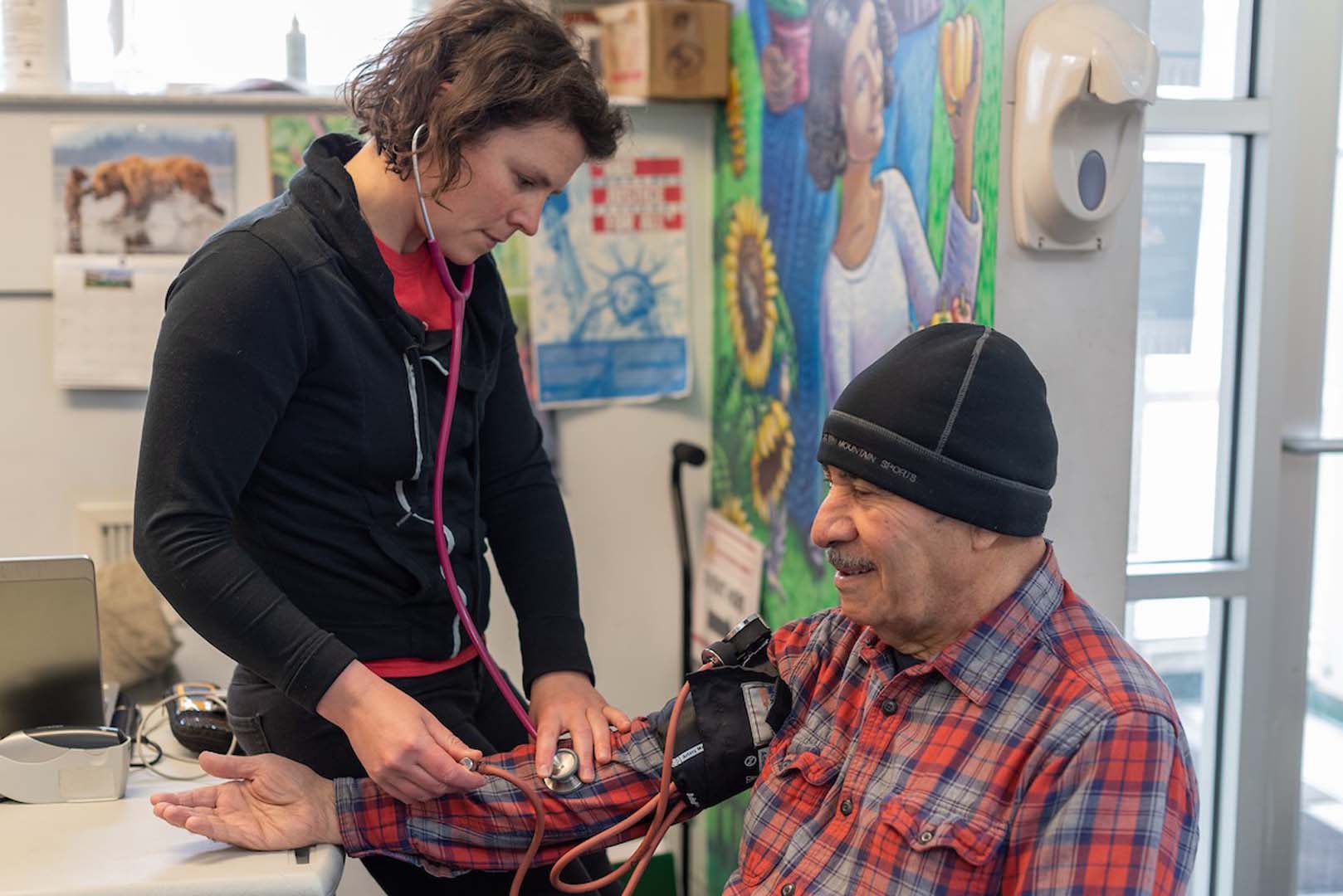
Food insecurity screening in health care is essential because food insecurity often has negative health impacts that aren’t immediately visible. Many patients may not express concerns about food access, leading to delayed intervention and potential progression to malnutrition or other related health issues. Screening allows health care providers to identify at-risk patients early, much like other health risk screens, and ensure they receive appropriate follow-up services.
These screenings can be performed by non-medical staff or self-administered, with more complex diet evaluations handled by licensed providers. Standardized screening not only helps address current food insecurity but also encourages patients to seek help in the future if food access becomes a concern.
Food Insecurity Screening Tools
A 2021 Food Insecurity Screening systems survey by FAHC confirmed that Hunger Vital Signs had become the standard tool for food insecurity screening across Vermont.
The Hunger Vital Sign (HVS) consists of two questions:
- “Within the past 12 months we worried whether our food would run out before we got money to buy more.” Often / Sometimes / Never True.
- “Within the past 12 months the food we bought just didn’t last and we didn’t have money to get more.” Often / Sometimes / Never True.
Hager, E. R., Quigg, A. M., Black, M. M., Coleman, S. M., Heeren, T., Rose-Jacobs, R., Cook, J. T., Ettinger de Cuba, S. E., Casey, P. H., Chilton, M., Cutts, D. B., Meyers A. F., Frank, D. A. (2010). Development and Validity of a 2-Item Screen to Identify Families at Risk for Food Insecurity . Pediatrics, 126(1), 26-32. doi:10.1542/peds.2009-3146.
The PRAPARE (Protocol for Responding to and Assessing Patients’ Assets, Risks, and Experiences) tool is a standardized screening tool used by health care providers to assess patients’ social risk factors. It helps identify factors like housing instability, food insecurity, and lack of transportation, which can impact health outcomes. By collecting this information, health care teams can connect patients with appropriate resources and interventions to address these social needs.
The CMS Health-Related Social Needs (HRSN) Screening Tool is a standardized tool developed by the Centers for Medicare & Medicaid Services to help health care providers identify social needs that impact patient health, such as housing instability, food insecurity, transportation, and access to utilities. By assessing these factors, the tool aims to support better care planning and connect patients with community resources to address their unmet social needs.
The WellRx tool is a platform designed to help individuals find affordable prescription medications and manage their overall health. It offers a free prescription discount card that provides significant savings at pharmacies across the U.S. In addition to medication savings, WellRx features resources to track prescriptions, set medication reminders, and access health-related information, empowering users to take control of their health and wellness while reducing costs.
The SBINS (Screening and Brief Intervention for Social Needs) tool is designed to help health care providers identify and address patients’ social needs that may impact their health, such as housing, food insecurity, and transportation. Through brief, targeted questions, providers can assess these needs and offer immediate interventions or referrals to community resources. SBINS aims to improve health outcomes by addressing social risk factors of health within the clinical setting.
The One Key Question tool is a patient-centered initiative that encourages health care providers to ask women of reproductive age a simple but impactful question: “Would you like to become pregnant in the next year?” This approach opens up conversations about family planning, allowing providers to offer personalized care, including preconception counseling, contraception options, or other health services based on the patient’s preferences and needs. The tool helps support informed decision-making and promotes better health outcomes.
The DAST-10 (Drug Abuse Screening Test-10) is a brief, 10-item questionnaire used to identify individuals who may have a substance abuse problem. It assesses the severity of drug use and related issues by asking about drug use patterns, problems associated with drug use, and related behaviors over the past year. The tool is used by health care providers to screen for substance abuse and to determine the need for further assessment or intervention.
The CAGE-AID tool is a brief screening questionnaire used to identify potential substance abuse issues. It is an adaptation of the original CAGE tool, specifically designed to assess alcohol and drug use. The acronym CAGE stands for the key questions about Cutting down, Annoyance by criticism, Guilty feelings, and Eye-openers. The CAGE-AID version includes additional questions related to drug use, making it a valuable tool for detecting substance abuse problems and guiding further assessment or intervention.
Nutrition Screeners
The Tufts Friedman School of Nutrition Science and Policy is actively engaged in research related to nutrition screening tools. Many nutrition tools focus only on malnutrition such as the Malnutrition Screening Tool , which is currently being piloted in VT. Research is focused on the creation of practical, evidence-based solutions that can be used by health care providers to assess nutritional needs and improve patient care. UC Davis currently has a Food Behavior Checklist, that looks more closely at daily nutritional intake. These tools are not intended to replace the role of a Registered Dietician; however, they are intended to give health care professionals a standardized tool to help with knowing when to refer to a Registered Dietician. Some people may have access to food, but the food they have access to may not be healthy food.
The Nutrition Security Screening tool was developed at Tufts University Food is Medicine, in collaboration with Kaiser Permanente and Los Angeles County Department of Public Health. This screening tool is a validated 2-item screening tool that can be used in the health care settings to assess nutritional needs to improve patient care. Dr. Caroline Owens created a Tip Sheet to help clinical teams integrate nutrition security screening into routine care in a sensitive and patient-centered way. The resource includes practical guidance on screening implementation, reducing stigma, responding to positive screens, and building referral pathways to community food and Food is Medicine resources. A comprehensive webinar and a shorter training module are both available to support staff learning, on-boarding, and ongoing training needs.

Research Corner
Hunger Vital Signs (HVS) podcasts
The Policy in Plainer English podcast is a grant-funded program of Bi-State Primary Care Association, with each season exploring topics related to Vermont health care policy. This page includes archive from the two seasons focused on the food access and health care program. For the full list of episodes visit PlainerEnglish.Buzzsprout.com or search for the series on your favorite podcast player (such as Spotify , Apple Podcasts , or Amazon Music ).
Aired: Fall 2020 to Spring 2021
Season 3 of Policy in Plainer English was produced during the first year of the planning grant for integrating food and health care in rural Vermont. It supported the grant goal of outlining common ways that health care practices help patients connect with food access resources in their communities.
Hunger Screening – Part 1 : Kristen Bigelow-Talbert (Bi-State Primary Care Association) and Katy Davis (Hunger Free Vermont) discuss screening for food insecurity. Recommended pre-listen is Community Health Needs Assessments .
Hunger Screening – Part 2 : Kristen and Katy from Part 1 are joined by Christina Quinlan from Islands Community Medical Services, Inc. in Maine. Recommended pre-listen is EHRs .
Mini-Episode — Predicting Food Insecurity : A quick look at using predictive analytics to assess which patients might be at risk of food insecurity and how to best reach them with resources they can use.
Care Coordination : Following up from the screening episodes, Kaylana Blindow (Bi-State Primary Care Association) and Laurie Somers (Northern Counties Health Care) walk through the common next step, which is care coordination.
Care Navigator : Jodi Frei (OneCare Vermont) and Patrick Clark (Gifford Medical Center) take a deep dive on a particular platform: Care Navigator. This platform combines care coordination and also care management. These types of inter-organizational information exchanges are notoriously difficult, and they get even trickier if attempting to include community organizations.
Bonus: Panel on Connecting to Food Resources : Roundtable discussion of outreach systems to help FQHCs connect their patients to nutritious food.
Help Me Grow : Janet Kilburn and Elizabeth Gilman discuss Help Me Grow, and the role this program’s coordinated services play in helping families with young children connect to food resources.
Food and Transportation : Faye Mack (Hunger Free Vermont) and Maureen Boardman (Little Rivers Health Care) join us to talk about how to tackle the related problems of barriers to transportation and barriers to food access.
Medically Tailored Meals : David Waters, CEO of Community Servings , a Massachusetts-based Medically Tailored Meals (MTM) program, explains what defines this approach to food as medicine. A good companion piece is Food As We Age (Season 4), an episode with Chris Moldovan from AgeWell about meals for older Vermonters.
**Lifestyle Medicine – Part 1 : Dr. Elisabeth Fontaine and Dr. Scott Durgin provide background on the Lifestyle Medicine framework ahead of Part 2, which outlines the Lifestyle Medicine program at Springfield Medical Care Systems.
**Lifestyle Medicine – Part 2 : A conversation with the Lifestyle Medicine team at Springfield Medical Care Systems- Laura Jensen, Adam Ameele, Scott Durgin.
Children & Healthy Eating : Featuring two leaders of programs that engage with children around topics in healthy eating: Koi Boynton, from Healthy Roots Collaborative , and Emmy Wollenburg, from RiseVT speaking about Dinner Together, an initiative to encourage families to eat together.
Food Prescription Pilot Program : Chelsey Canavan and Natalie Romano from Dartmouth-Hitchcock and Jennifer Fontaine from the Upper Valley Haven to discuss a new Food Prescription pilot.
**Springfield Medical Care Systems is now North Star Health . The definitions, Lifestyle Medicine framework and approaches to health care discussed in these two episodes remain relevant and continue to reflect current practices implemented in VT and around the country.
Aired: Fall 2021 to Winter 2022
In this season of Policy in Plainer English we looked at skills food professionals use to understand how people experience flavor and what influences food choices – and what implications that might have for health professionals working with patients on diet change. Find the season episodes below, and click here for an Extended Playlist .
Season Intro 1 and the Bonus Season Intro – Designing Better Health Systems.
How We Experience Flavor : Author Rowan Jacobsen discusses how all of our senses, plus context and memory, shape our experience of food. This episode also introduces a central theme of the season – what happens if our perceptions change? For example, if we lose our sense of smell?
What Makes a Food Popular? : Sensory analyst Roy Desrochers has worked with some of the largest food companies on designing new products. He explains Flavor Leader principles used to create foods that will appeal to consumers. He also discusses how some of the key modern principles used to understand what makes a food popular began with work on medicine.
All You Need to Know About Flavor Appreciation : Master Sommelier David Keck rounds out the introduction to sensory analysis by explaining his approach to wine, how he got interested in this topic, why wine tasting should not be intimidating (and yes, the principles he discusses are applicable beyond wine).
Putting Appreciation Into Practice : Research chef Dale Conoscenti is one of the world’s leading authorities on ‘ice cream inclusions’, while chef educator Leah Pryor is co-founder of the Culinary Nutrition programs at UVM Medical Center. The two chefs each discuss how they apply the analysis skills discussed in the first three episodes to adjusting foods and shaping diets.
A Pause to Think Bigger : This season is about bringing insights from food professionals to bear on how we shape our individual diet . . . but what about moving the other way, from individuals to commercial scale production? This end of year special episode looks at the question of scale, helped by clips from the Sporkful’s Mission ImPASTAble series .
Food Journals : We do not mean food logs or calorie counting. Instead, essayist Alexandra Johnson provides insight on using a journal to foster creativity, and how this creativity practice can be brought into the realm of food and diet.
How to Cook : Professor Amy Trubek, and instructors John Corliss and Emily Barbour, join to talk about core principles in the courses they are developing at the Department of Nutrition and Food Sciences at the University of Vermont. Their curriculum combines sensory analysis with basic cooking skills to increase food agency.
Food As We Age : We all benefit from paying greater attention to our sensory experience of food and how that shapes our enjoyment of what we eat, that insight will help us modify our diet successfully when we need to make changes. And we will all, eventually, need to make changes because our relationship with food shifts with age. In this episode, registered dietitian Chris Moldovan gets into the details of maintaining a nutritious diet as we get older.
Building a Team : The previous episode offered a look into the work of a registered dietitian; this episode considers different ways to build teams of people with multiple skill sets to support healthy diets. We revisit key ideas from previous guests, offer a new interview with the director of the Teaching Kitchen Collaborative, and attempt several sports metaphors.
Season Finale : A season finale. . . with special guests! Dr. Edward Phillips and Juna Gjata, creators of the podcast Food We Need to Talk , join us to comment on common themes between the two series, and suggest what should be next in your food & health podcast listening line up.
Data & Resources
- CDC/ATSDR Social Vulnerability Index (CDC/ATSDR SVI): https://www.atsdr.cdc.gov/placeandhealth/svi/index.html
- CDC PLACES: Local Data for Better Health https://www.cdc.gov/places/index.html
- County Health Rankings & Roadmaps https://www.countyhealthrankings.org/
- HOPE Initiative Factors that influence health https://www.hopeinitiative.org/state/vermont
- USDA Household Food Security Rates: https://www.ers.usda.gov/topics/food-nutrition-assistance/food-security-in-the-us
- Walk to Shop https://www.ccrpcvt.org/wp-content/uploads/2022/12/Closing_Mobility_Equity_Gap_TAC.pdf
- Transportation in Vermont (Go! Vermont): https://www.connectingcommuters.org/
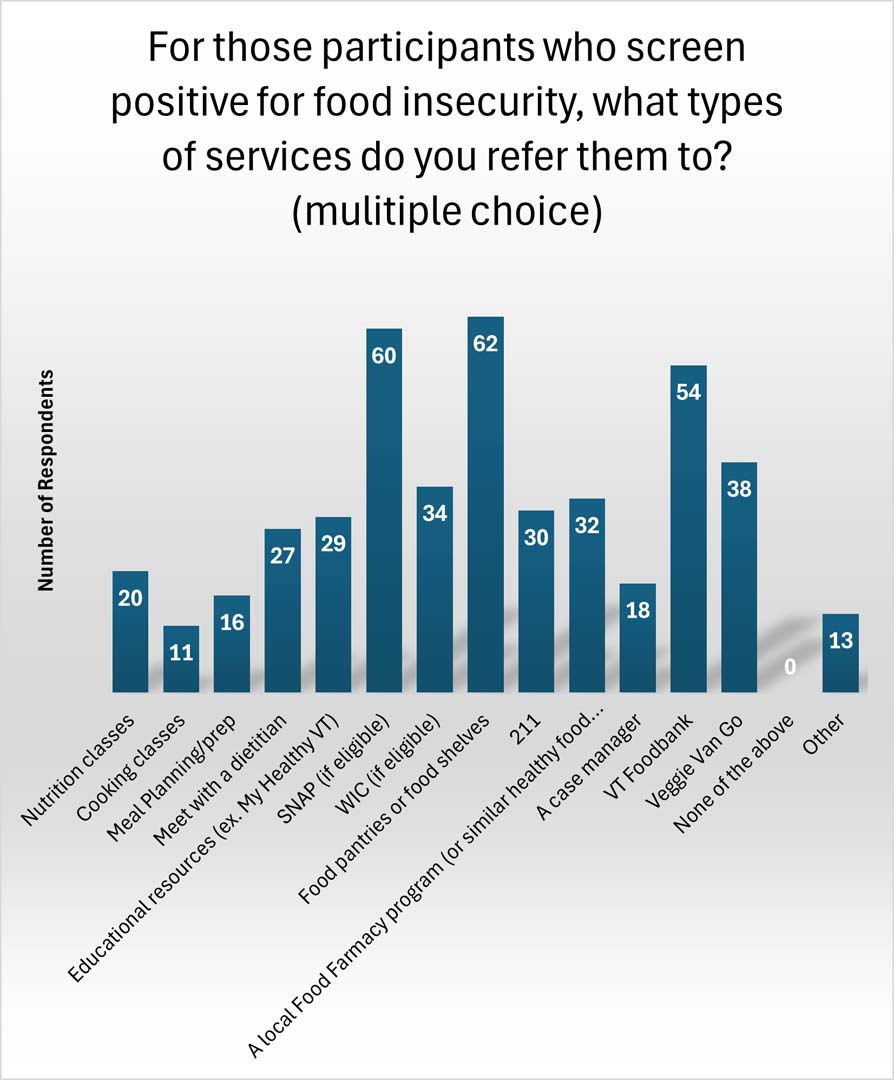
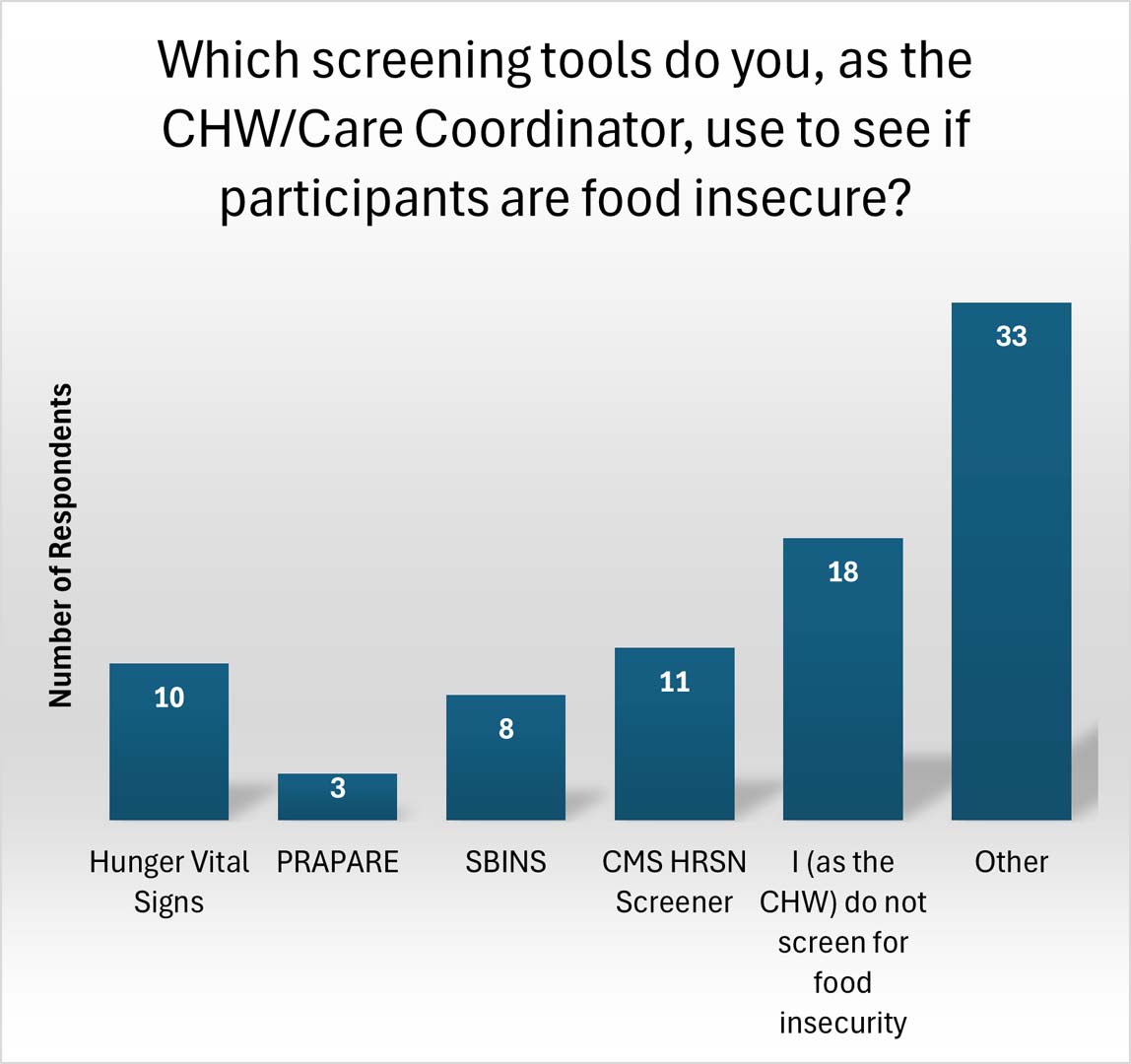
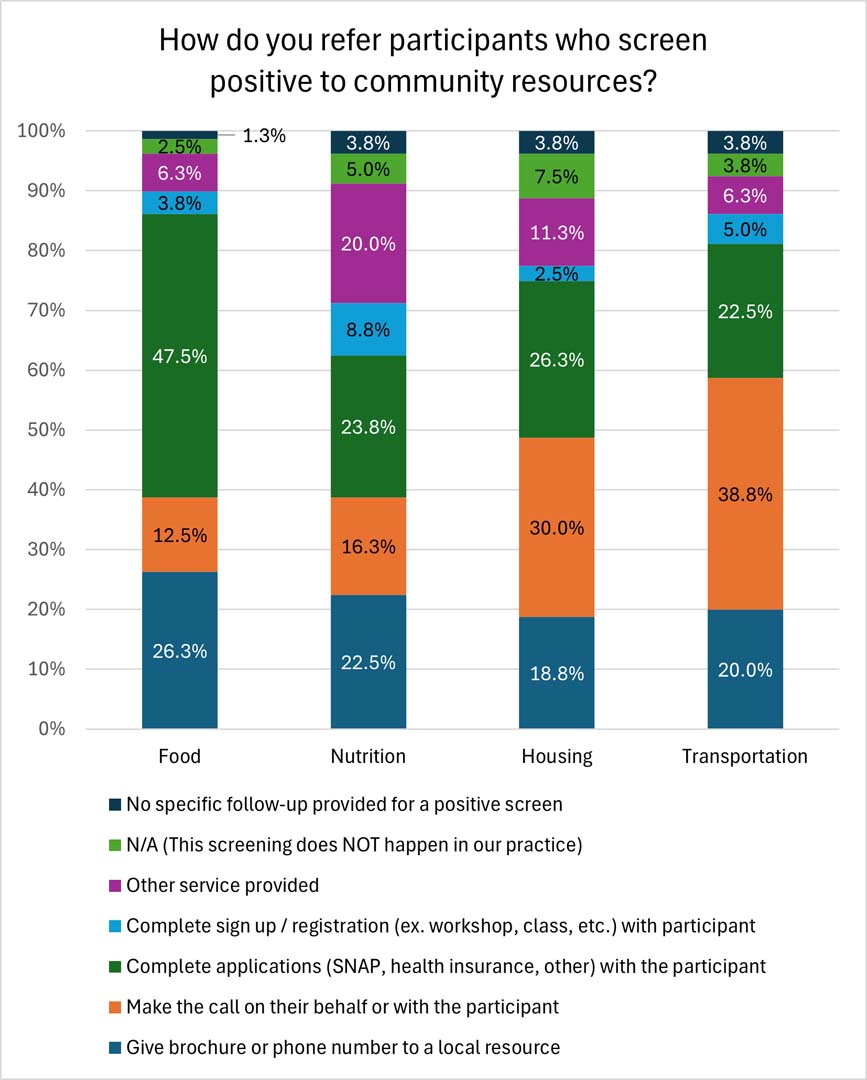
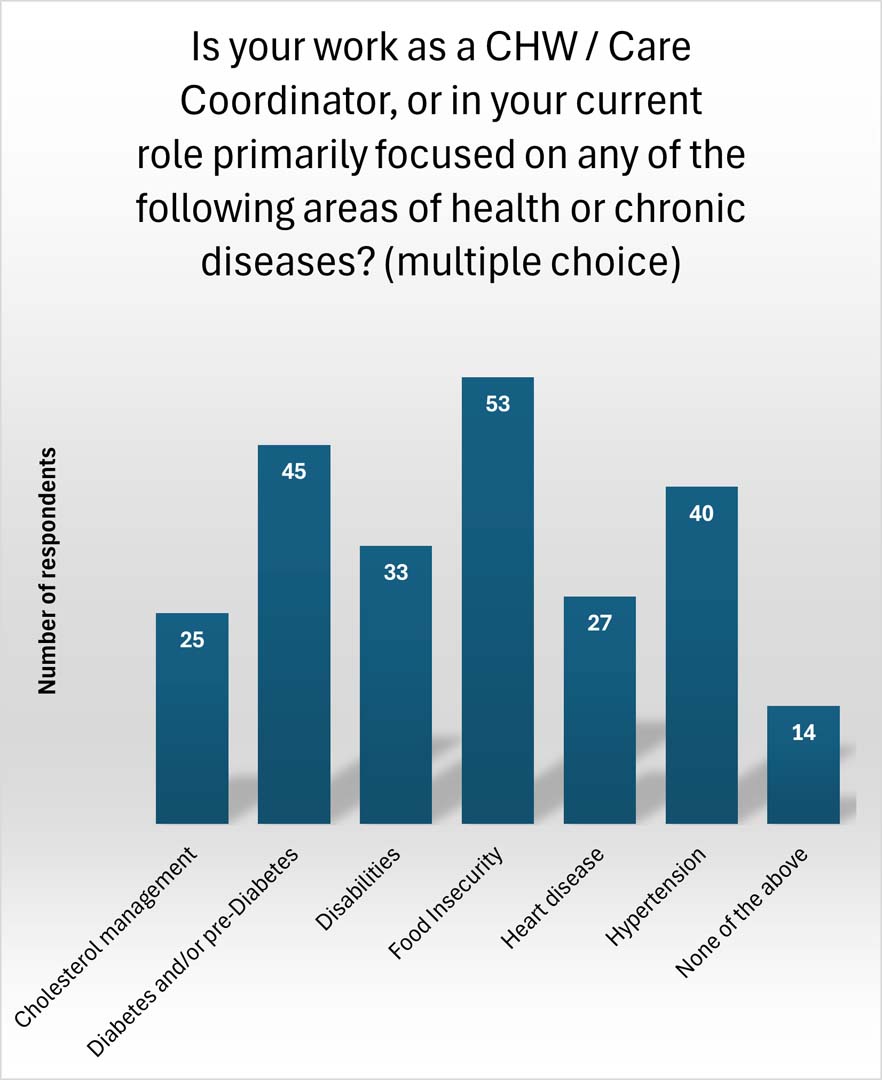
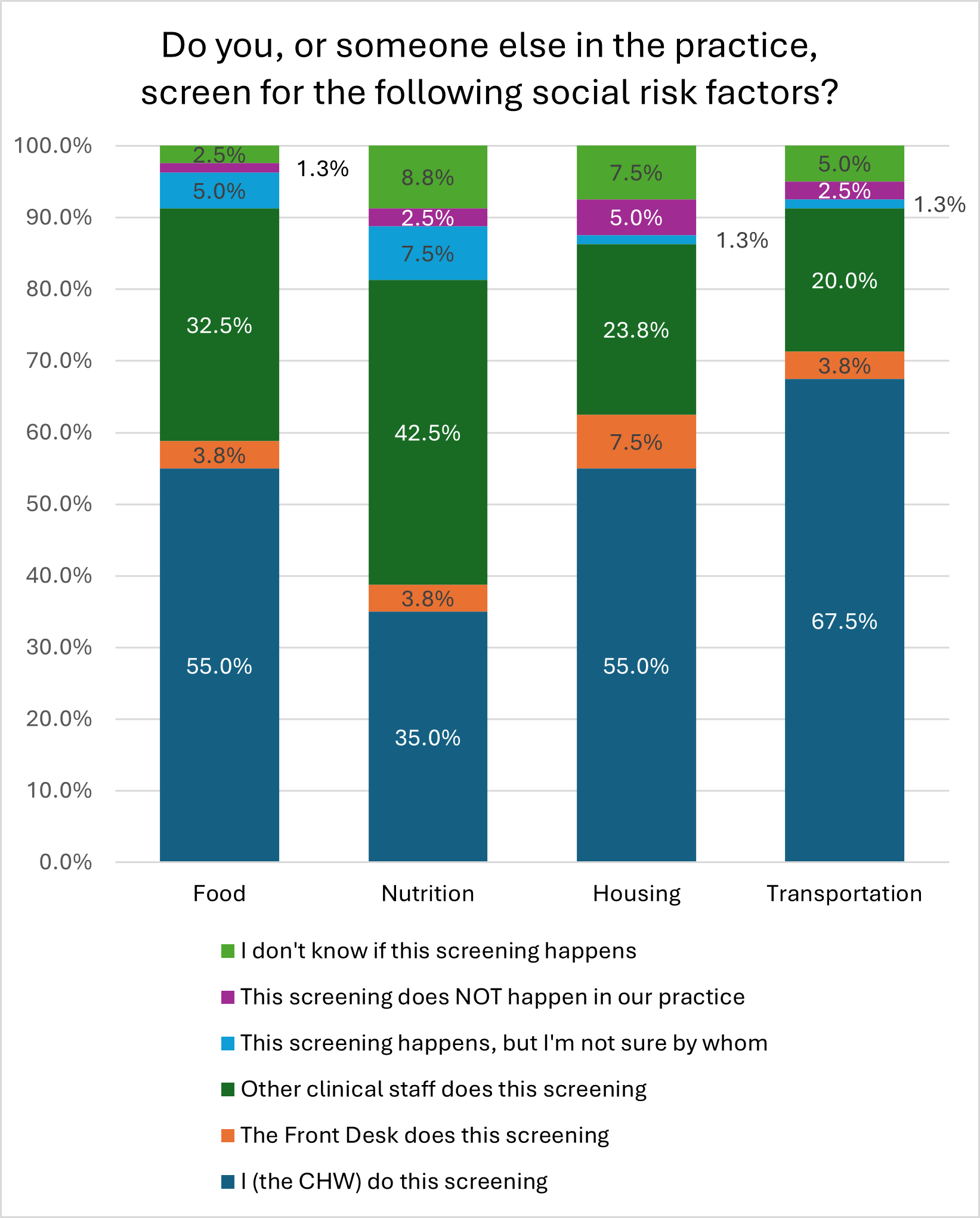
VT Community Health Worker (CHW) Survey Results
Select a chart below to view larger



Contact Us
Interested in learning more? Contact us at Bi-State Primary Care Association for more information.